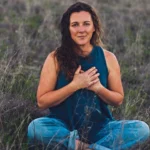
For the sake of privacy, I’ll call him Kent.
Seems fitting, because when I first saw him at the sperm donor panel presentation at the Jones Infertility Counseling Conference in Philadelphia, PA this year (2025), all I could see was Dean Cain from the 90’s series, Lois & Clark. Kent is objectively handsome and, on paper, an ideal sperm donor.
At a sperm bank, he, and every single other donor, would be identified by less than a pseudonym; Donors at banks are referenced by number. Deidentifying donors tends to make donor conception more palatable for prospective parents; It removes the person and highlights traits. It aligns with the narrative, “It’s just sperm.”
But who is the donor, and why does that matter?
Kent is more than the sum of his vials. He is more than a pretty face and impeccable family health history, too. Kent has a beautiful soul. He is caring, thoughtful, existential and philosophical. He will show up, and his life will change when his biological children and their parents reach out to him in the future.
Donating gametes has lifelong implications. It shapes one’s life while donating, and every day after. Donor’s feelings evolve over time; They are messy and complicated. Donating impacts the lives of the donor’s family of origin, their future spouse and the children they may share. Family limits, and realities, hit sperm donors especially hard. Establishing contact with the parents and children (or DC adults), and maintaining healthy boundaries, is even more complicated.
If the bank upholds their family limits, and the families each have two children (the national average in the US), Kent could have 60 biological children living all over the world. That’s potentially 30 families, 30-60 parents and 60 bio kiddos to build and maintain relationships with. If he talked to one child per week (well, every 6 days), he could talk to each child once a year. That’s it.
What many donors experience is the weight of the responsibility of updating medical history, building connections and maintaining relationships. It’s a lifelong responsibility, and one that is often complicated by time zones for FaceTime calls, finances for visits, general availability, and a tremendous emotional weight.
It is my hope that by sharing stories of donors, prospective parents will explore donor conception with more empathy and understanding for all parties, including Donor Conceived and donors, alike. I also hope that Kent’s story will help further my goal as a therapist who supports Intended/Recipient parents: To help people make well-informed, ethical decisions about if and how to proceed.
I provided Kent with a framework of questions to help him share his story. His answers, and story, are below.
1. How did you learn about donation?
This is an interesting question because there wasn’t a singular moment where I learned about donation. I’d heard about it through pop culture, or on the news, but it was never something that I had sat down and done legitimate research on or had been looking into for personal reasons.
2. What made you decide to pursue it? What was your thought process like?
As sappy as it sounds, I was driving on a nice summer day with the windows down. Life felt fantastic, and I wanted to help people to feel the way I did in that moment. I decided on two things: that I would start donating money with the intention of helping those that may need it, and that I would become a sperm donor, provided I could, of course. I’m extremely lucky from a genetic perspective that there are no major diseases on either side of my family, and I viewed this, at the time, as a gift that I wanted to share. Ironically, I now fundamentally don’t believe in any trait being “better” than another. I think we are all different, and with that comes unique experiences, voices, and perspectives. I know that specific traits that I exhibit made me marketable as a donor, but I won’t pretend I had qualms with the ethics at the time. The reality is that I was a single man in my early 20s and had no idea what the future would look like for me. Would I have my own kids, adopt, be childless with a partner. I didn’t know? Would my future partner even be able to have kids? I decided that I wanted to give what I could to help those who were having trouble making a family, and in the process would have a more clear idea of my future.
3. How many times did you donate? And how many months/years?
I didn’t realize when I signed up how often I would be donating, nor that my time in the program would be 3-4x longer than it should have been. I started in November of 2019, and didn’t finish until November of 2022. In that time, COVID happened, but before that, I was put on a 6 month hold since my girlfriend at the time went somewhere with a high Zika risk. Then after we could donate, during COVID, I was put on another 6 month hold for another girlfriend who went somewhere tropical (Zika, again), and after all that, when I thought I was wrapped up in 2021, I was asked to return since there was a high demand for my vials among the people who had already been given access. This doubled my yield, so I spend another year donating until 2022 when I finally wrapped up. I had grown immensely as an individual, and didn’t even feel the same way ethically as when I had started. I was back to being single when I wrapped up, and while active I had donated 3 times a week consecutively for the whole time.
4. Can you explain how the physical act of donating impacted your personal growth, from a sexual perspective?
The strain this process had on me sexually can’t be understated. I was not allowed to ejaculate within 24 hours of a donation. My schedule was M-W-F. That meant Saturday was the only time I could do anything personal. Being demi-sexual and donating, it honestly didn’t feel like sex was a part of my life I could contribute to a relationship. I don’t say this because it had that impact at the time, but because looking back, it’s only when I was on a break donating that I grew sexually. The first relationship actually ended after roughly 6 months, around when my hold was lifted. It wasn’t that I ended the relationship because I had to donate. That thought never crossed my mind, but I look at the time of my 20s, and figuring out who I am, and what I prefer, and I realize I did none of that while I was actively donating. The experience was also fantastic because I realized how little I value sexuality without personality attached. A friend from college had planted the idea of demi-sexuality in my head years ago, but I never really subscribed to the label at the time. I now know that I care a lot more about the person I’m with, and how they feel, than how things feel for me. What I learned through donating though is how much it still matters how I feel. It was just me in the donation room, and I enjoyed very little of it. I never got used to the process even after all those years, and was frequently concerned that the appointment was only for 15 minutes, though it often took longer. I learned so much about myself in my 20s and donating was a big part of it, but I won’t pretend even for a second that there was any sexual joy in the process. As to if any weight of what I was doing by donating contributed to my experience, I still can’t say.
5. Were you told about family limits?
I was told that they targeted a certain number of vials, and this would equal roughly 25-30 families.
6. Do you know what the results are from your donations?
I don’t know the exact number though, but I do know that there are no more vials available for new families. Of the families that have chosen me, there are 18 confirmed pregnancies, though everyone I’ve talked to told me to prepare for the fact that the number is likely much higher.
7. Do you have contact with any of the families?
I haven’t heard anything from any of the families yet…
8. Are you open to contact before the children turn 18? After 18? Why?
… but I am open to contact before or after 18. They can contact the cryobank at 18 to get my contact information, which I would have agreed to even if there was an option, which there shouldn’t be. It’s not for me to decide what someone needs in their life to feel content, and I believe that by donating I’ve played a role in helping make someone who they are, be it a small or large part of their identity. If they have a desire to know who I am, I feel they have a right to know that. Things become much easier when they are 18, but if they put in the work to find me before then, I’m not going to deny that when they clearly need it at that moment. I won’t pretend to know anything about what the future of my relationships with my children will look like, but I chiefly believe they are the ones to set those terms. I’m obviously one person, and 18 people is a lot. But I’ve never shied away from helping strangers, or giving advice to those that ask for it, and I think it would be crass to not offer that to people whose lives I’ve helped create.
9. What does your family think?
My family is aware that I donated, and I asked them all before I started the process. However, the only person that I talked to regularly about the experience is my mother. She’s definitely more excited than I am. I think she’s really looking forward to the opportunity to one day meet some of my kids, and she was overjoyed to hear some of the stories I had heard during the conference. We both share the sentiment that love should be shared, but I’m concerned about forcing anything that my kids might not truly consent to. I’m definitely being too cautious, but I struggle with accepting how much of donating was for me vs. the families I helped.
10. The psychological process: Therapy offerings, PAI screening, consult with a mental health professional, etc.
Having the privilege to recently have met other donors, I was delighted to know how similar our personalities are in terms of caring, compassion, and as innate and introspective thinkers. While many of the more senior donors I’ve met were not psychologically screened, I was put through a rather basic psychological test. I remember answering questions about my feeling such as how often I was depressed, my opinion of myself, thoughts I may have regarding harm to myself or others, thoughts of suicide, etc. I’ve filled these out a few times but most shocking was that the therapist accused me of lying because my score was so low, which meant I was a “positive” minded individual. I had the perspective that the therapist was for the well being of the bank rather than me, primarily because I’ve never had a similar experience nor has anyone I know had one, even with therapists who were not the best fit. I wasn’t given stories of other donors, or what my life may look like in 20 years. Nor what feelings I may have, or the isolation I may experience from being in a rather unique situation. Things like how I should feel or what I could expect were not discussed. I do remember asking what I would spend the money on from donation, but was told this was more for egg donors so it didn’t really apply. To be fair to the process, given that so much of the donation process is designed to protect recipients from donors, the experience of me being vetted makes sense. I don’t harbor any I’ll feelings, and if I was given personal
therapy resources, I was not aware of them. I did eventually seek therapy but not for donating. It was outpatient CBT for a neuropsych evaluation. While I’m “neurotypical”, parts of my brain can best be described as exceptional. It’s made interacting with my peers difficult for about as long as I can remember. It’s also why I suffer from perfectionism. I’m quite good at working out the ideal situation but rarely have the skills to make it happen. I’m human and none of us are perfect, nor should we be. It took learning this with a professional to stop beating myself down for not always being exceptional; for having quirks, and for sometimes saying “you too” when the server says to enjoy your meal. I never talked about donating in these sessions and I don’t think I’m far enough in my journey to have been forced to think about what I did by donating. I needed, and still need to hear what my future may look like. That the number of children I have is probably much larger than 20 and why that number is going to be a lot. What interactions are normal and which ones are not. What role should I have in my children’s future, if any at all. This isn’t just for me and my wellbeing, but I believe makes me someone who is better able to handle the role of what my children may seek from me as their biological father; whatever that may be. Therapy definitely has helped me to develop skills and learn to treat myself with respect. While these aren’t the panacea to my future problems, they are great tools to better handle the relationships that will form when a flurry of children reach 18 and begin to make contact. That’s the biggest difficulty with the decision I’ve made. Hardships will be a part of life, and there will be laughter, sorrow, and both tears of joy and sadness in my future. I believe that’s part of being human. My fear is that I have an opportunity to shape people’s lives, but I never want people to listen to me blindly. I don’t enjoy being put on pedestals, because I’m human and I make mistakes. I don’t want people to take things I say or do to heart without a hearty dose of skepticism. As a smart individual, I’m usually a good voice of reason in any situation, but I never want to be the only voice. This is something I practice on a day-by-day basis. I’m sure I’ve littered this document with plenty of cautionary terms, rather than being blunt. Ironically, I love to joke by taking
aggressive stances on matters I don’t feel strongly about, for things that nobody should have any feelings towards. I love debate, and open discussion, and consider myself a practitioner of philosophy, ethics, and critical thinking. As I grow as an individual these concerns will get better as they always have, but I’m always aware that I speak strongly because I feel I am right. I don’t feel I am right because I speak strongly, and in this day and age the two are often confused.
11. How has/does/might donating impact your romantic relationships.
Ethically I feel I have an obligation to let any romantic relationship know that I have donated. I actually don’t feel strongly on the matter, but I do believe that it might conflict with someone’s morals, so they have a right to know. Past that I don’t go too into the details, because the truth is that I don’t yet have the details. I can and will share what I’ve heard about what the future might look like, but it generally gets grouped with family planning in relationship talk.
12. How did it change your life while you were donating?
I actually learned very little while donating since nothing immediately jumped out to me during the process. It has however given me a unique lens that has fundamentally changed how I perceive the world, and I think I am kinder for it. I also realize how small the world is, and how similar we all are. The fact that we treat those who are not like us so poorly is a tragedy. When I consider that there are 18 people I am infinitely connected to by blood, and what that means, I realize how little it takes to tie us all together. Even though we may not share the same tongue, cuisine, or appearance with strangers, does not make them any less connected to us. I find it’s difficult now to read the news since I frequently weep. I see and hear the humanity in people and it devastates me know what’s happening. That for all intents and purposes these strangers are my family. We all share the same tiny rock in space, and all have the same cares for our loved ones. The same desire for comfort, and happiness. It’s a horrible burden, but I’m glad to have found my humanity and I don’t think I would feel the same way had I not had this experience.
13. Can you elaborate on what you said during the panel discussion about you experiencing “a lot of joy and a lot of loss?”
The stories of joy and loss rest with the other panelist XX who has experienced immense love and loss in his life. Meeting him was a fantastic experience, first because he was the first donor I had met, but second because in talking to him about what he’s experienced I realize that I can’t see the future, but have been building the right tools to handle what the world may have in store. I’ll never truly be ready, because my life has been fill with mostly joy. There is an anecdote that the best thing that can happen to you is to be stricken dead tonight in your sleep. If I continue to live a long and healthy life, I will have to bury both my parents, I will grow old, and lose my health, I will see injustice and horrors no human should subject another to. I’ll lose countless pets, loved ones to car crashes, cancer, heart disease, preventable tragedies. As my circle grows, I will hear more hardship. Ours is a world of suffering because we all must die. These are not things I can control. To be human is to suffer, to cry, and to empathize, and to wonder why I have been forsaken to be subject to pains I wish could be taken away. But without
that there cannot be joy. I would never meet any of my kids. I would have no more times with my sister, my mother, my father, my girlfriend, her family, my friends, my neighbors, the random acts of kindness that show the beauty of how we are all connected. That love transcends words, and cultures. This is worth the pain, and in my darkest moments when the tears are the worst, I need to remember that this is why life is worth living. That the joys of those special moments is why we all live our lives. It’s never going to be easy and that strength will be tested in more ways than I would ever wish on my worst enemy and to paraphrase Alan Watts, life is a gift box that you open daily, where you never know if you’ll get a pleasant surprise or a horrid one. One day you may open it up and get a dead rat and the other you may get a nice new camera. Your first thought may be that you don’t want a dead rat, you only want the camera, and you work so hard in your life to fill it with only the good things. So, every day you open the box and only find something nice. That however is not the point of life. The joy of life is when we open up the box, we never know what we are going to get, and that’s why we’re delighted to se something nice. The love in the world is so beautiful, so resplendent and pure in its innocence because it’s contrasted by all the horror and evil that fate can cook up. It’s when we forget the reality of the world that we lose sight in what matters, and it’s through hearing the stories of others that we remember to love the joys in our life. I’m glad to have had the opportunity to bring so much joy into the world.
Thank you so much for sharing your story. Wishing you a life full of open boxes, and the
wisdom to see them all as gifts.
*The thoughts and feelings of “Kent” are his, alone. Though his feelings may reflect similarities to many egg and sperm donors, they do not necessarily reflect the exact feelings of all donors. His, and all donor’s, feelings will evolve over time and are not reflective of how they may feel in the future.